Heat Pump Water Heaters: What Seattle Homeowners Need to Know
Thinking about a heat pump water heater in Seattle? Here's what you need to know about how they work, installation requirements, cost vs. standard tanks, and how to save up to $1,750 through local rebates.
When your water heater fails, replacing it the same way you always have is the easy call. But if you're already spending $1,200–$2,000 on a replacement, it's worth understanding whether a heat pump water heater makes more sense for your home — and whether you can dramatically reduce what you actually pay out of pocket through current rebate programs.
Here's what I think every Seattle homeowner should know before making the call.
What Is a Heat Pump Water Heater?
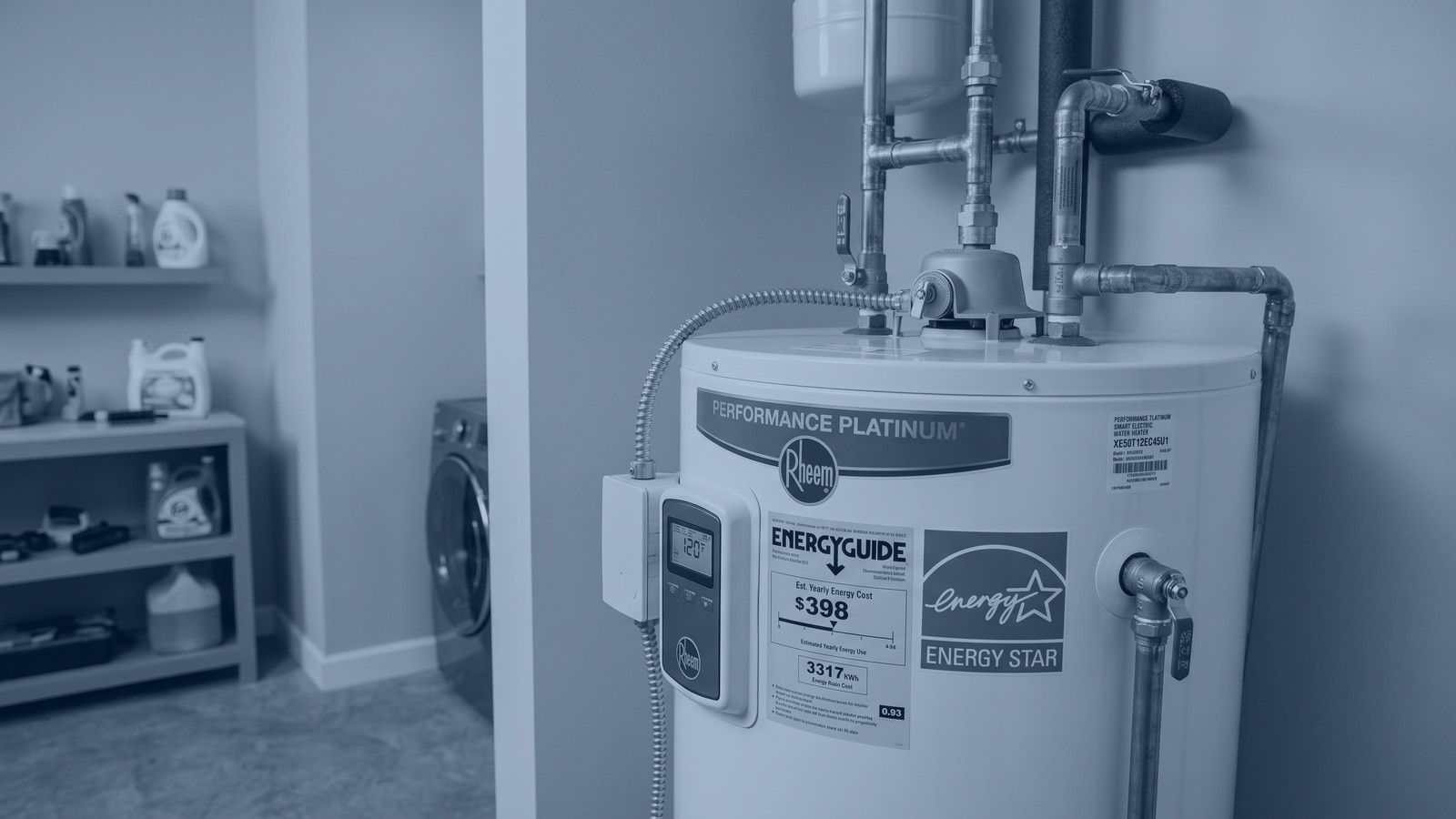
A heat pump water heater (HPWH) — also called a hybrid electric water heater — works fundamentally differently than the standard electric tank most Seattle homes have.
A standard electric tank uses resistance heating: electricity flows through a heating element, which gets hot and heats the water. Straightforward, reliable, and pretty inefficient — almost all the energy goes directly to heat, with very little waste, but you're converting electricity 1:1 into heat at the highest possible cost.
A heat pump water heater moves heat rather than creating it. It pulls warm air from the surrounding space, compresses it to raise its temperature, and uses that heat to warm the water in the tank. For every unit of electricity it uses, a heat pump delivers 3–4 units of usable heat. That ratio is called the Coefficient of Performance (COP). A standard electric tank has a COP of about 1.0. Most heat pump water heaters land between 3.0 and 4.5.
Think of it like a refrigerator operating in reverse. A refrigerator moves heat out of a cold box into your kitchen. A heat pump water heater moves heat from the surrounding air into your water.
Most heat pump water heaters also have built-in electric resistance elements for backup — which is why they're called "hybrid." When you need a lot of hot water fast or the surrounding air is particularly cold, the unit can switch to resistance mode. Under normal Seattle conditions, that backup mode rarely kicks in.
Why Seattle Is Actually a Good Fit
Heat pump water heaters have a reputation for underperforming in cold climates, and that reputation is partly deserved — but Seattle isn't that climate.
The efficiency of a heat pump water heater drops when the surrounding air temperature falls below about 40°F. In Minnesota or upstate New York, that's a real problem for garage installations in January. In Seattle, sustained temperatures below 40°F are uncommon even in the coldest winters. A heat pump water heater in a Seattle garage or basement utility room can operate in efficient heat pump mode for most of the year.
We also benefit from some of the lowest electricity rates in the country through Seattle City Light. That makes the efficiency advantage of a heat pump water heater even more meaningful in dollar terms — and it makes the case for switching from gas water heating to electric even stronger than it is in most US cities.
One thing to factor in: the heat pump pulls warmth from the surrounding space, which means it cools and dehumidifies that space slightly. In summer, this is a genuine bonus — your water heater is also partially cooling your utility room. In winter, the effect is minor and rarely noticeable in Seattle's temperatures.
Cost Comparison: Heat Pump vs. Standard Tank vs. Tankless
Here's an honest look at what different water heater types actually cost to own over time. These are representative ranges — your actual numbers depend on brand, capacity, current setup, and what your installation requires.
*10-year totals include equipment, installation, and estimated operating costs. Does not include rebates.
A few things worth calling out:
Heat pump water heaters cost more upfront but save money over the long run. The typical payback period in Seattle is 5–8 years depending on how much hot water your household uses. After that, the savings continue for the life of the unit — which is typically 10–15 years.
After rebates, the math improves significantly. Seattle City Light customers can get $750 back. PSE customers can get $1,000–$1,100. Income-qualified households may stack additional savings through the WA HEAR program. A heat pump water heater that costs $1,600 installed could come down to $850–$1,000 after rebates — which is competitive with a standard tank replacement.
Tankless electric is rarely a good choice for Seattle homes. Whole-home electric tankless units draw enormous amounts of electricity (24kW or more) and typically require a significant panel upgrade to install. The operating savings versus a tank are modest. The upfront cost is high.
Gas tankless does save money over gas tank, but you're still tied to volatile gas prices and a gas line. With Seattle moving toward electrification, committing to gas infrastructure for 15+ years is increasingly hard to recommend.
Installation Requirements to Know Before You Commit
Heat pump water heaters aren't plug-and-play replacements for standard tanks. Your installation space needs to meet some real requirements — and knowing them before the plumber arrives saves everyone time and money.
Air space (the most common issue)
The unit needs at minimum 700–1,000 cubic feet of surrounding air space to operate. That's roughly equivalent to a 10x10 room.
The heat pump pulls warmth from the surrounding air. In a tight utility closet with a sealed door, there's simply not enough air volume to sustain the process. You'll either need to reconfigure the space (adding louvers or ventilation to an adjacent area), use a model with ducted air intake/exhaust, or reconsider the location.
This is the item most homeowners don't know about until too late. A good plumber checks this before the unit is ordered.
Electrical (critical for homes switching from gas)
Most heat pump water heaters require a dedicated 240V, 30-amp circuit. If you're replacing an electric tank, there's a good chance the circuit is already there. If you're switching from a gas water heater, you'll need an electrician to add the circuit before installation.
Budget $300–$600 for the electrical work if it's needed. Don't schedule the plumber until the circuit is confirmed.
Height and clearance
Heat pump water heaters are taller than standard tanks — many models are 60–75 inches tall, and they have air intake/exhaust grilles at the top that need a few inches of clearance. Measure your ceiling height and check the specs on the model you're considering before anything is delivered.
Condensate drain
The dehumidification process produces condensation — a quart or more per day in humid conditions. You need a floor drain, condensate pump, or gravity drain path nearby. Most Seattle utility rooms and basements have floor drains. If yours doesn't, a small condensate pump adds a modest cost but is a reliable fix.
Ambient temperature
The surrounding space should stay above approximately 40°F year-round for the heat pump to operate efficiently. Most Seattle homes are fine. If your water heater is in an uninsulated detached garage on the west side of the building, it may be borderline in January — a small amount of added insulation usually solves it.
What We Typically Recommend
We install a lot of heat pump water heaters in Seattle, and the brands that consistently perform are:
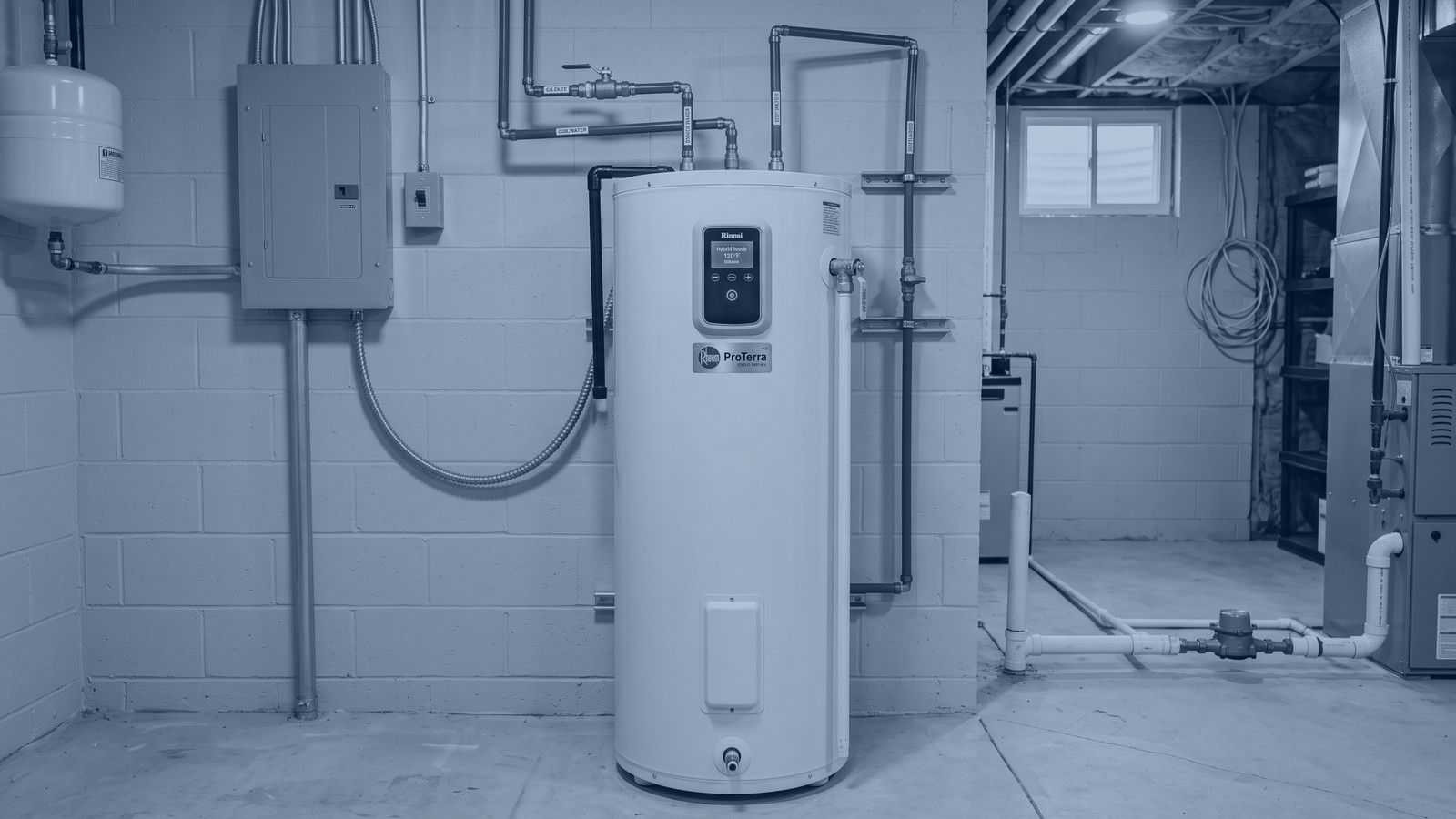
Rheem ProTerra — Our most-installed HPWH. Excellent efficiency ratings, reliable hybrid operation, solid warranty. Qualifies for City Light and PSE rebates.
AO Smith Voltex — Comparable performance to the Rheem, widely available through local distributors. A solid choice for homes with standard setups.
Bradford White AeroTherm — More common in commercial applications but works well in residential settings. Built for reliability.
The model that's right for your home depends on your household's hot water demand, your installation space, and what's available through our distributor at the time of the job. We'll tell you what makes sense — not just whatever is on the truck.
The Rebates Available Right Now (Summer/Fall 2026)
If you're buying a heat pump water heater, you should know what you can get back. Quick summary:
- Seattle City Light customers: $750 rebate, through December 31, 2026 while funds last. Available through contractor discount, in-store coupon, or post-purchase form (within 93 days).
- PSE customers (Bellevue, Kirkland, Renton, Redmond): $1,000 standard rebate, $1,100 for income-qualified customers. Submit within 30 days of installation — this deadline is strict.
- WA HEAR program: Additional rebates for households at or below 150% of King County AMI. Amounts vary by local administrator. First-come, first-served.
- Federal 25C tax credit: Terminated by the One Big Beautiful Bill Act (signed July 4, 2025). No federal credit applies to 2026 installs, regardless of what older articles say.
For full details on eligibility, how to apply, and stacking options, see our complete rebate guide →.
Is a Heat Pump Water Heater Right for Your Home?
Here's a straightforward way to think about it:
Good candidate: You're replacing an electric tank water heater. Your utility space is at least a 10x10 room (or ventilates to an adjacent area). You plan to stay in the home for at least 5 years. You want to reduce your electricity bill.
Consider carefully: Your utility space is very tight. You're switching from gas and will need electrical work. You have unusually high hot water demand (large household, jacuzzi tub, multiple showers running simultaneously) — in that case, a larger capacity tank or a supplemental unit may be worth considering.
Probably not the right fit: You have a tight budget for total replacement cost and don't qualify for rebates. Your water heater is in a space that regularly drops below 40°F.
When I do a consultation, I look at all of this before making a recommendation. There's no right answer that applies to every Seattle home — it depends on your specific setup.
Ready to Find Out What Makes Sense?
We do free in-home consultations for water heater replacements. We'll check your space, your electrical setup, your utility, and what rebates you qualify for — before you spend anything.
If your water heater is over 10 years old or starting to show its age, fall is a smart time to replace it. Rebate funding is still available, and our schedule is better now than it will be in December when everyone's water heater fails at once.
Frequently Asked Questions
How does a heat pump water heater work?
It pulls warmth from the surrounding air and uses it to heat the water in the tank — similar to how a refrigerator moves heat, just in the opposite direction. It uses 2–4 times less electricity than a standard electric resistance heater for the same amount of hot water.
Are heat pump water heaters effective in Seattle’s climate?
Yes. Seattle’s mild winters (rarely below 40°F) mean heat pump water heaters can operate in efficient heat pump mode most of the year, unlike colder climates where winter air temperatures limit performance.
How much does a heat pump water heater cost to install?
Equipment runs $1,200–$1,800 for most residential models. Installation adds $600–$1,200 depending on whether electrical work is needed. After Seattle City Light ($750) or PSE ($1,000–$1,100) rebates, effective out-of-pocket cost drops significantly.
What are the installation requirements?
At minimum: 700–1,000 cubic feet of surrounding air space, a 240V/30A dedicated circuit, clearance above the unit, and a condensate drain path. The ambient temperature of the space should stay above approximately 40°F.
How long does a heat pump water heater last?
Most residential heat pump water heaters have a lifespan of 10–15 years with proper maintenance. This is comparable to standard electric tanks and generally longer than tankless electric units.
Are heat pump water heaters loud?
They produce some operational noise — a fan and compressor sound roughly comparable to a refrigerator or window AC unit (around 45–50 dB). Standard electric tanks are nearly silent. In most utility rooms this isn’t a concern, but it’s worth knowing if the installation location is adjacent to a bedroom or living space.
Do I need a permit for a heat pump water heater installation?
In Seattle, water heater replacements typically require a permit. We pull the permit and handle the inspection as part of the job.
Can I stack the City Light or PSE rebate with the WA HEAR program?
Yes. If you’re income-qualified (at or below 150% of King County AMI), you can apply for the WA HEAR rebate on top of your utility’s rebate. The programs are separate and designed to stack.
Last updated: August 2026. Rebate programs and amounts are subject to change. Verify current details at seattle.gov/city-light and pse.com/rebates before making purchasing decisions.